
Overview of the 2021 Big Data from Space Conference and Analytics Uses
In the fields of geospatial analytics and satellite data science, the Big Data from Space 2021 conference was a historic event. This event, which took place online from May 18 to 20, 2021, brought together industry experts and researchers to discuss cutting-edge approaches for processing Earth observation data at scale. Advanced methods in distributed processing, cloud computing, and machine learning were demonstrated during the conference, with uses going beyond conventional remote sensing. The main advances and cross-industry applications that resulted from BiDS'2021 are examined in this overview.
The Mission and Foundation of the BiDS 2021 Conference
Through cooperative relationships between significant European space agencies and academic institutes, the conference established itself as a pivotal event for improving satellite data science.

The History and Structure of the Conference
The European Space Agency, the European Commission's Joint Research Centre, and the European Union Satellite Centre worked together to organize the Big Data from Space 2021 conference, sometimes referred to as BiDS'2021. The event, which was originally scheduled to be held by University POLITEHNICA of Bucharest, switched to a virtual format while keeping its primary objective of developing satellite data processing techniques and geospatial intelligence. "From Insights to Foresight," the conference's topic, focused on converting unprocessed satellite information into useful predictive knowledge.
Researchers, data scientists, and business experts came together for this interdisciplinary meeting to discuss the computing difficulties in handling Earth observation datasets that are petabytes in size. The conference's European research network was reinforced by support from the Romanian Space Agency, opening doors for the cross-institutional exchange of developing technologies.
Global Participation Model and Virtual Event Format
Unprecedented worldwide participation without geographical restrictions was made possible by the big data from space 2021 event's switch to an online conference style. Participants from many time zones were able to connect through networking sessions, panel discussions, and real-time presentations made possible by the virtual environment. This digital revolution illustrated how technology may make access to state-of-the-art scientific discoveries more accessible to everybody.
Keynote addresses, technical talks, and topic workshops aimed at addressing particular satellite data processing difficulties were all part of the three-day event framework. The conference's educational influence was extended beyond its intended dates thanks to the virtual format, which made it possible to preserve recorded sessions.

Important Themes: From Foresight to Insights
The investigation of how raw data is converted into predictive knowledge systems was at the heart of the conference on big data from space (BiDS 2021). Case examples showing the development from first satellite observations to processing pipelines to final decision-support systems were provided by researchers. Machine learning models that could predict changes in the environment and the needs for resource allocation were highlighted by the focus on foresight skills.
The integration of artificial intelligence into operational satellite processing systems, multimodal data fusion, and temporal analysis of change detection were among the session subjects. The conference materials reflected the development of big data technology from experimental tools to production-ready systems by showcasing real-world applications rather than just theoretical ideas.
BiDS 2021 Research Domains and Technical Sessions
Specialized tracks spanning the whole workflow, from the collecting of raw satellite data to sophisticated analytical applications and operational deployment techniques, were included in the technical curriculum.
Essential Conference Tracks and Session Types
The conference's material was arranged into many specialized tracks that covered different facets of computational geospatial analysis and satellite data science. Peer-reviewed presentations and chances for group discussion about implementation issues were included in every track.
| Track Name | Focus Areas | Key Technologies | Application Domains |
|---|---|---|---|
| Data Processing Pipelines | Automated ingestion, quality control, atmospheric correction, geometric rectification | Apache Spark, Dask, cloud-native formats | Environmental monitoring, urban planning, agriculture |
| Machine Learning Applications | Classification, segmentation, object detection, time series forecasting | TensorFlow, PyTorch, XGBoost, ensemble methods | Land cover mapping, disaster response, infrastructure assessment |
| Scalable Computing Architectures | Distributed systems, parallel processing, GPU acceleration, container orchestration | Kubernetes, CUDA, HPC clusters, serverless computing | Real-time processing, archive analysis, on-demand services |
| Data Fusion and Integration | Multi-sensor combination, SAR-optical fusion, auxiliary data integration | Data cubes, harmonization algorithms, semantic layers | Climate research, precision agriculture, security applications |
| Visualization and Delivery | Interactive mapping, web services, API development, user interface design | Web mapping libraries, OGC standards, RESTful APIs | Public dashboards, decision support systems, mobile applications |
Participants were able to concentrate on topics that were most pertinent to their job while staying up to date on advancements in the profession as a whole thanks to this methodical approach.
Methods for Processing Data from Earth Observations
The big data from space 2021 technical program's presentations included a range of strategies for addressing the volume, velocity, and diversity issues that arise with Earth observation data. Experiences with cloud-native processing architectures that use elastic computing resources to grow dynamically in response to workload needs were discussed by researchers.
During particular sessions, optimization strategies for cutting computing expenses without sacrificing analytical precision were examined. Intelligent data sampling techniques, progressive refining methods, and hierarchical storage systems that strike a balance between long-term archive needs and access speed were among the subjects covered.
Frameworks for Satellite Data Integration Shown at BiDS 2021
Throughout BiDS2021, the integration of data from several satellite platforms emerged as a recurrent subject. Technical frameworks for coordinating sensor observations with varying spatial resolutions, spectral properties, and temporal revisit patterns were discussed by the speakers. Geometric alignment methods and complex calibration processes are needed to meet these integration issues.
In order to reduce technological obstacles for users further down the line, a number of presentations concentrated on developing analysis-ready data cubes that pre-process and arrange satellite pictures. Data cubes allow researchers to concentrate on scientific topics rather than data wrangling by methodically managing preliminary tasks.
Innovations in AI and Machine Learning from Big Data from Space 2021
Presentations included advanced neural network topologies and deep learning architectures that are especially tailored for processing multispectral satellite images at both continental and global scales.
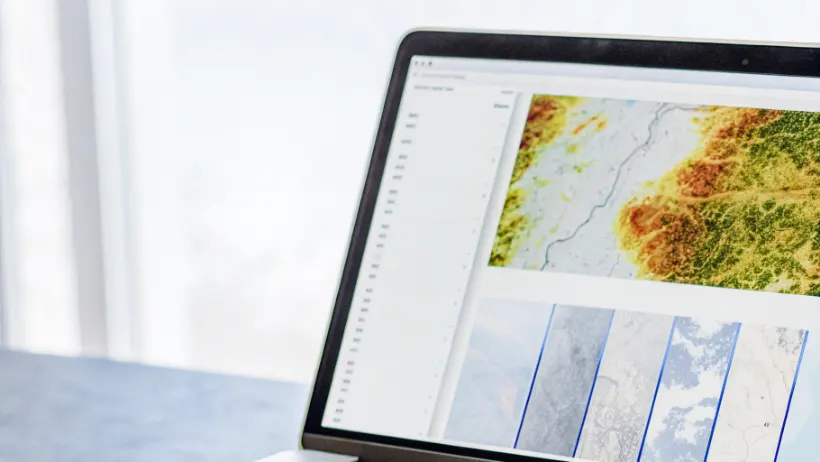
Geospatial Analysis Neural Network Architectures
The conference included talks on specific neural network designs tailored for spatial data features, and the use of deep learning to satellite images has advanced quickly. Although researchers have shown improvements that take into consideration the special characteristics of multispectral and hyperspectral data, convolutional neural networks are still the basis for image classification tasks.
The reported architectures used self-supervised pretraining techniques and transfer learning strategies to overcome the problem of inadequate labeled training data. A number of presenters demonstrated how very modest labeled datasets might be used to fine-tune models learned on large unlabeled satellite archives for certain objectives.
Deep Learning Methods Presented at the Space BiDS 2021 Conference on Big Data
The BiDS machine learning presentations showcased advanced methods tailored to the difficulties of satellite data analysis:
- Semantic segmentation models that give each pixel in high-resolution images a class label allow for the accurate demarcation of building footprints, agricultural field borders, and different types of land cover with a level of precision that is comparable to manual digitizing standards.
- The practical fact that completely labeled training data is rarely available at the scale needed for worldwide applications is addressed by weakly supervised learning techniques that train efficient classifiers using noisy or missing labels.
- Domain adaptation strategies overcome distribution shift caused by changing environmental variables by enabling models trained on one geographic region or time period to efficiently generalize to various places or dates.
- Techniques for quantifying uncertainty that offer confidence estimates in addition to forecasts, allowing decision-makers downstream to evaluate the dependability of model outputs and pinpoint areas that can benefit from human inspection.
- Frameworks for multi-task learning that use shared representations to optimize for several related goals at once, such change detection and land cover categorization, can increase performance while lowering computing costs.
These methods, which stand out for their focus on real-world implementation with actual datasets, represent the current level of practice in applying artificial intelligence to Earth observation difficulties.
Developments in Predictive Modeling for Processing Large Data Sets
The big data from space 2021 conference demonstrated predictive modeling skills that project future circumstances based on past satellite observations, going beyond categorization and detection tasks. These models enable applications in agricultural yield forecasting, urban growth modeling, and environmental risk assessment by combining machine learning and time series analysis to detect patterns and estimate future developments.
In order to provide more accurate and dependable forecasts, speakers discussed ensemble modeling techniques that integrate predictions from several algorithms. With examples of how cloud computing platforms facilitate operational forecasting systems, the scalability of these predictive systems was a crucial factor.
Analytical Crossover Applications and Big Data in Casinos
When applied to operational intelligence problems in casino settings and gambling industry analytics, the techniques created for satellite data processing show impressive flexibility.

Systems for Pattern Recognition Adapted from Analytics of Space Data
Operational intelligence and gaming analytics in casinos have discovered surprising uses for the advanced pattern recognition techniques used for satellite imagery analysis. Finding significant signals in large datasets with high complexity and intricate spatial or temporal correlations is the core issue in both fields.
In order to assess player movement patterns throughout casino floors, improve table location, and comprehend traffic flow dynamics, computer vision techniques that were initially created for object recognition in satellite photography can be modified. Security camera feeds may be processed by the same convolutional neural network designs that divide up land cover categories in order to monitor the density of patrons in various gaming zones.
Applying BiDS Techniques to Operational Intelligence in Casinos
When used in casino data contexts, the analytical methods showcased at the BiDS 2021 conference on big data from space have particular benefits:
- Similar to environmental monitoring applications, time series analytic techniques for tracking seasonal vegetation changes readily adapt to modeling player activity cycles, detecting peak gaming periods, and estimating staffing requirements based on past trends.
- By using clustering algorithms to classify comparable satellite images into land cover classes, player populations may be divided according to behavioral traits, allowing for more individualized marketing campaigns and specialized gaming experiences that increase player happiness.
- Monitoring changes in player preferences, game popularity trends, and the evolution of spending patterns that guide strategic choices is made possible by change detection algorithms that detect changes in landscape circumstances between satellite picture pairings.
- Understanding how table location impacts player mobility and how proximity to amenities effects game length may be done via the use of spatial autocorrelation techniques, which quantify the influence of nearby geographic regions on one another.
- Casino operators may simultaneously study player behavior at the individual, group, and population levels thanks to multi-resolution analytic frameworks that analyze satellite data at several spatial scales. This allows them to uncover insights that single-scale research would overlook.
The adaptability of sophisticated analytical frameworks is demonstrated by these methodological transfers from Earth observation to big data in gambling industry applications.
Models for Behavioral Prediction Using Large Data Streams
Casino operating systems that need to examine constant streams of transactional data, sensor inputs, and player interactions will find that the real-time data processing capabilities demonstrated at BiDS'2021 closely match their needs. Continuous data flows from satellite missions necessitate quick processing and quality evaluation in order to serve time-sensitive applications.
Predicting player preferences, estimating the length of gaming sessions, and determining the best moments for customer care representatives to intervene are all possible using machine learning models that have been trained on past patterns. The same ensemble modeling and uncertainty quantification methods covered in BiDS'2021 presentations provide the foundation of these predictive capabilities.
Prospects for the Future and Upcoming Technologies from Space Big Data 2021
The trajectory toward fully automated processing systems that include artificial intelligence across the analytical pipeline, from data input to final product delivery, was underlined in conference talks.
Infrastructure and Pipelines for Next-Gen Analytical
A path toward increasingly intelligent and automated data processing systems that need less human interaction was described in the conference sessions. From the first evaluation of data quality to the creation of the finished output, these next-generation pipelines use artificial intelligence at several points.
| Analytical Component | Traditional Approach | Advanced Approach | Computational Requirements | Scalability Considerations |
|---|---|---|---|---|
| Data Ingestion | Manual download and organization | Automated API-driven acquisition with event triggers | Moderate CPU, high bandwidth | Scales linearly with data volume |
| Preprocessing | Script-based batch processing | Containerized microservices with parallel execution | High CPU/GPU, moderate memory | Scales horizontally across compute nodes |
| Feature Extraction | Domain expert design | Learned representations from deep networks | Very high GPU, high memory | Requires distributed training infrastructure |
| Model Training | Workstation or small cluster | Cloud-native distributed training with hyperparameter optimization | Extreme GPU/TPU, very high memory | Cloud elasticity enables massive parallelization |
| Inference and Deployment | Offline batch predictions | Real-time streaming inference with model versioning | Moderate GPU, low latency networking | Edge computing and model compression enable scaling |
| Result Visualization | Static map products | Interactive web applications with dynamic data queries | Moderate CPU, optimized vector/raster tiling | Content delivery networks support global access |
The development of big data technologies and the declining cost of cloud computing resources are reflected in this shift toward more complex infrastructure.

Integrating Cloud Computing with Distributed Geospatial Processing
A recurring issue in several BiDS'2021 presentations was the transfer of satellite data processing to cloud platforms. Cloud computing infrastructure and major Earth observation data repositories are increasingly co-located, removing the requirement to download large datasets before analysis can start. Instead of the other way around, this design allows researchers to bring their methods to the data.
The lectures covered a range of cloud deployment techniques, such as container-based methods that guarantee repeatability and serverless architectures that grow automatically in response to workload needs. The presenters discussed cost-cutting strategies for controlling cloud computing costs without sacrificing analytical power.
FAQ
How does the gaming business use big data?
Player behavior analysis, game performance improvement, and marketing campaign prediction modeling are all examples of big data uses in gaming operations. After gathering transaction data from surveillance systems, loyalty program interactions, and gaming machines, casino owners use machine learning algorithms to estimate demand, segment their clientele, and customize promotional offers. These analytical skills are derived from approaches that were initially created for other fields, such as the geospatial intelligence methods demonstrated at conferences such as BiDS'2021.
What were the Big Data from Space 2021 conference's primary goals?
By exchanging expertise concerning scalable computer architectures, machine learning applications, and operational implementation methodologies, the main goals were to advance satellite data processing. By showcasing talks that tackled real-world difficulties in handling Earth observation data at scale, the conference sought to close the gap between academic advancements and production systems.
Which groups coordinated the BiDS 2021 event together?
The European Space Agency, the European Union Satellite Center, and the Joint Research Center of the European Commission worked together to organize the meeting. University POLITEHNICA of Bucharest was initially scheduled to organize the event, but the Romanian Space Agency also provided support.
What technological advancements were showcased during the big data from space BiDS 2021 conference?
Technological advancements included deep learning architectures tailored for multispectral images, cloud-native data formats suited for parallel processing, and automated quality assessment systems for continuous satellite data streams. Researchers presented ensemble modeling techniques, data cube frameworks that make it easier to retrieve datasets ready for analysis, and containerized processing pipelines that guarantee repeatability.
How can other businesses use satellite data processing techniques?
Since working with high-volume, high-velocity, and high-variety data presents fundamental issues for many businesses, satellite data processing techniques are widely relevant. Customer segmentation in retail and banking is made possible by pattern recognition algorithms that were created for the categorization of land cover. In supply chain management, time series analysis techniques are used to anticipate demand. Techniques for identifying anomalies are applicable to security monitoring and financial fraud detection.
Wrap-up
Through the sharing of cutting-edge techniques and useful implementation tactics, the Big Data from Space 2021 conference established itself as a leading platform for the advancement of satellite data science. With an emphasis on scalability, automation, and artificial intelligence integration, the technical presentations covered the whole analytical lifecycle, from data collecting through processing pipelines to decision-support applications. By extending access beyond conventional geographic limitations, the virtual format made it possible for people all around the world to participate in conversations on Earth observation analytics.
The conference demonstrated how sophisticated analytical frameworks created for satellite data processing easily translate to other fields confronting comparable big data difficulties, despite its core concentration on geospatial intelligence. The approaches offered—which include advanced pattern recognition algorithms, cloud-native processing architectures, and predictive modeling techniques—prove useful in a variety of sectors, from big data in casinos to commercial operations and environmental monitoring. BiDS'2021 stood apart from merely theoretical conferences due to its emphasis on actual implementation, which gave participants useful information for solving real-world issues.